



Tools for protection planning
Document how much data loss and interruption the workload can tolerate. Translate those objectives into testable recovery checks.

Know the recovery objective
Identify the source, data owner, retention policy and authorized restore destination. A policy becomes operational only when the corresponding connector is released.
Asset ownership
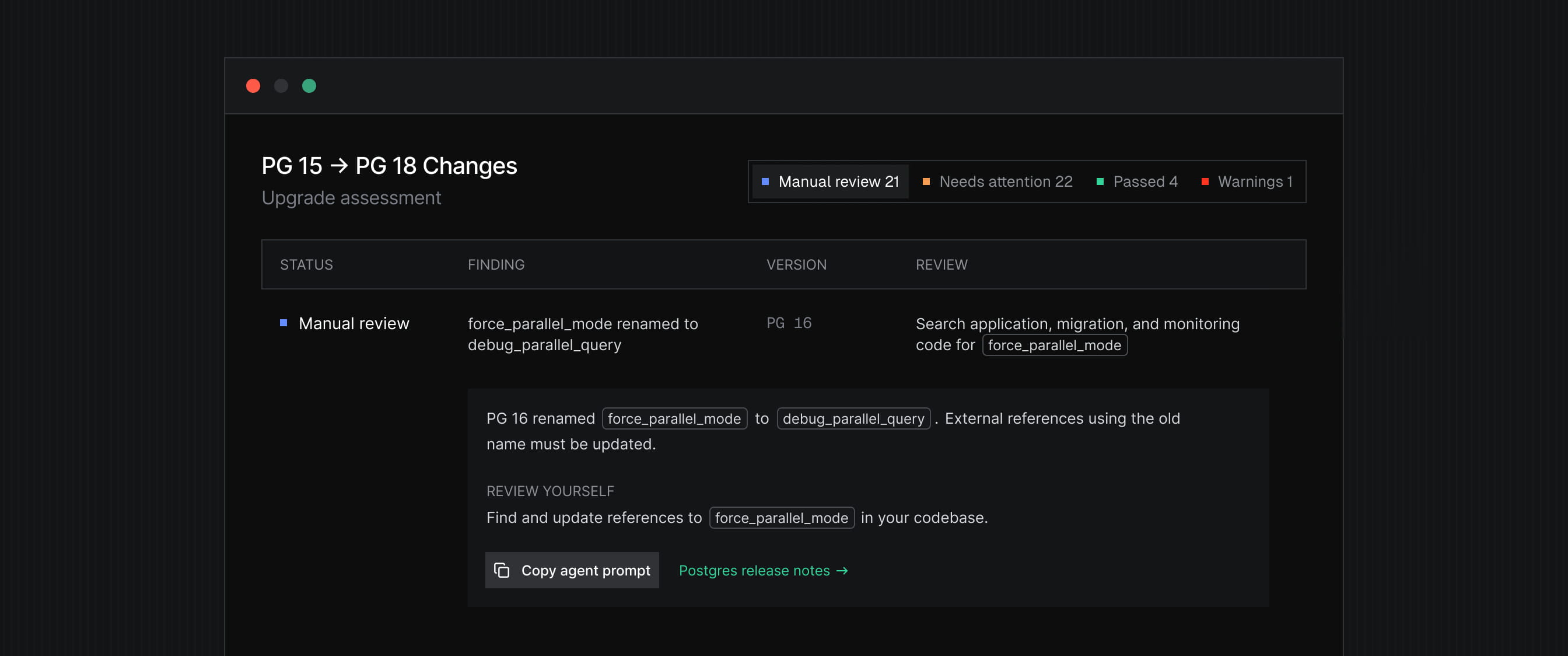
- Breaking changes between data versions
- Schema compatibility
- Extension compatibility
Identity and access
- Issues that affect your dataset
- Guidance on what needs attention
- A clearer path to your target version

Keep protection boundaries explicit
A completed copy is not a successful recovery. Validate identity, data integrity, dependencies and application behavior in an isolated drill.
Approved scope
- Dataset size
- Downtime requirements
- Available migration methods
Operating evidence
- A recommended migration approach
- Guidance for your migration
- A path from your source dataset to Vinexelprotect
Test the recovered application
Record the policy revision, approval and measured outcome. Separate a planned capability from a verified recovery result.
 Retention policy
Assign responsibility for the incident, recovery approval and service validation. Keep rollback and communication requirements in the plan.
 Key custody
Recovery performance, durability and availability need representative tests and applicable contracts. Reference artwork and diagrams do not establish a guarantee.
 Data location
Document how much data loss and interruption the workload can tolerate. Translate those objectives into testable recovery checks.
Preserve evidence of every decision
Preserve evidence of every decision
Identify the source, data owner, retention policy and authorized restore destination. A policy becomes operational only when the corresponding connector is released.